Noisy Breaker Box in Your Beecroft Home
Hearing a hum, buzz or crackle from the switchboard? It is an easy sound to tune out, and one of the more reliable early warnings a home's electrics ever give.
What follows covers what each noise tends to mean, which ones can wait, and which ones cannot. For a proper answer on yours, call (02) 9139 8011.
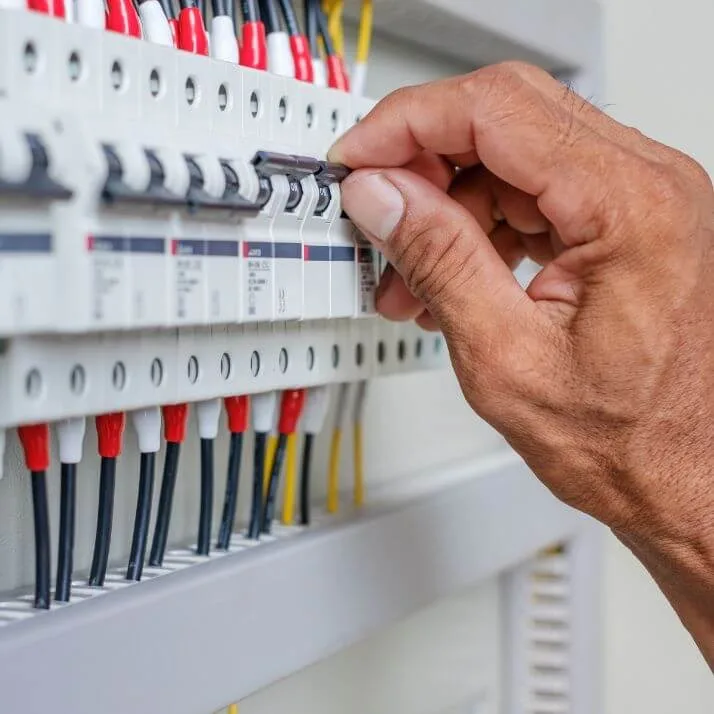
Why Your Switchboard Is Making That Noise
A switchboard in good order should be close to silent. A steady, low hum can be nothing more than a transformer or an old-style dimmer going about its work.
Buzzing, crackling, or a hum that is new and building is different. That is the sound of current meeting resistance somewhere it should not, and resistance always shows up as heat.
The noise itself will not hurt anyone. What generates it usually will, given enough time, which is why the sound deserves attention instead of a shrug.
Most people admit they walked past the meter box for weeks before registering it. That delay is normal, and it is also the reason to act once you finally have noticed.
The Most Likely Causes
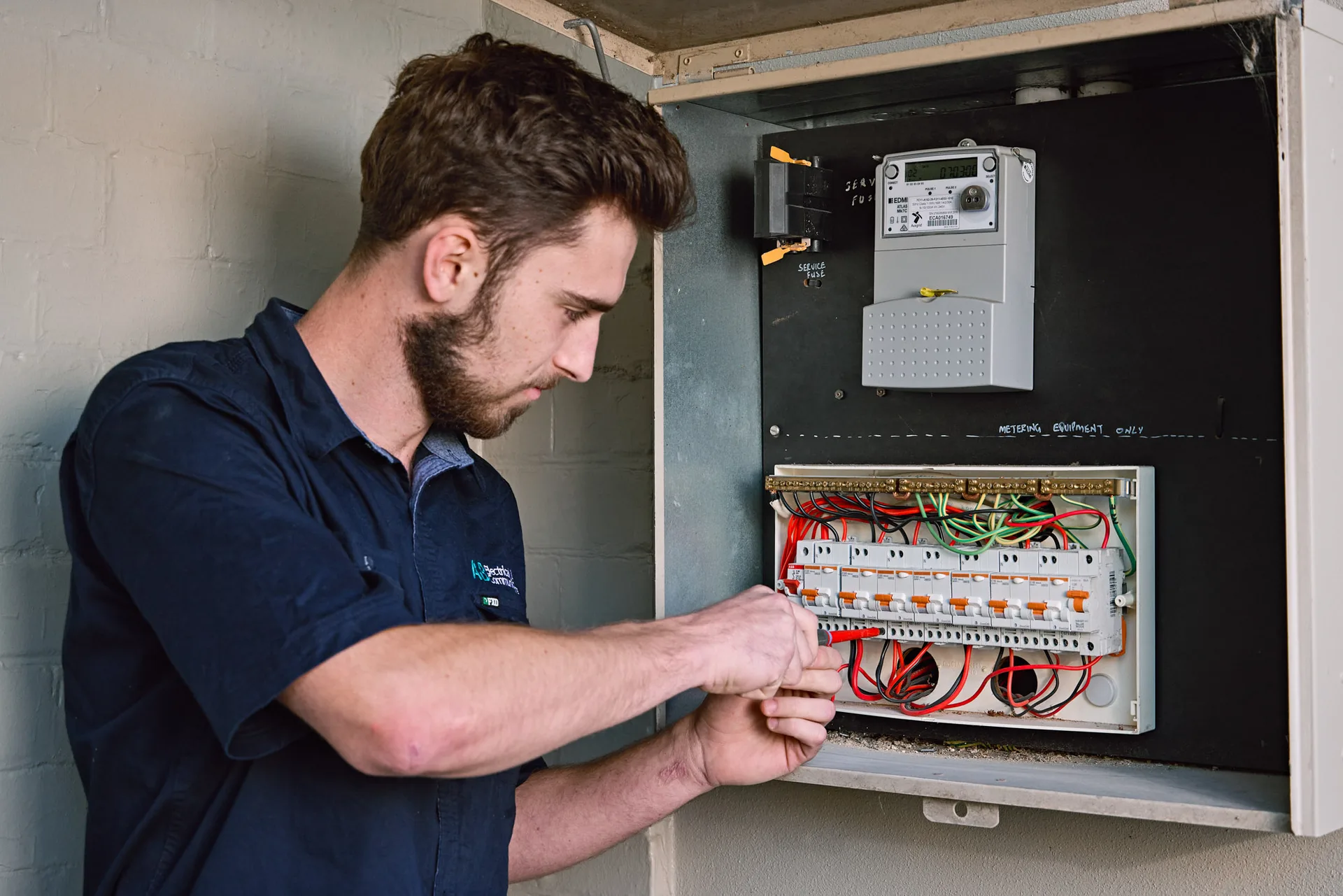
Nearly every noisy board we open comes down to one of six culprits, with age and accumulated load the threads running through them. Starting with the one we confirm most often:
- A loose terminal connection, screws worked free by years of heat-and-cool cycling, letting current arc across the gap.
- A circuit breaker failing internally, components degrading until the unit buzzes under load, often shortly before it dies altogether.
- An overloaded circuit, pushing more current through one connection than its rating anticipated, with a faint hum as the by-product.
- Corrosion or moisture at a terminal, typically where an enclosure no longer seals properly, producing a crackle or sizzle.
- A worn main switch, especially on original boards where the mechanism has operated for decades.
- A rodent or insect nest in the enclosure, rarer, and nothing to do with the electrics themselves.
Should You Worry? An Honest Answer
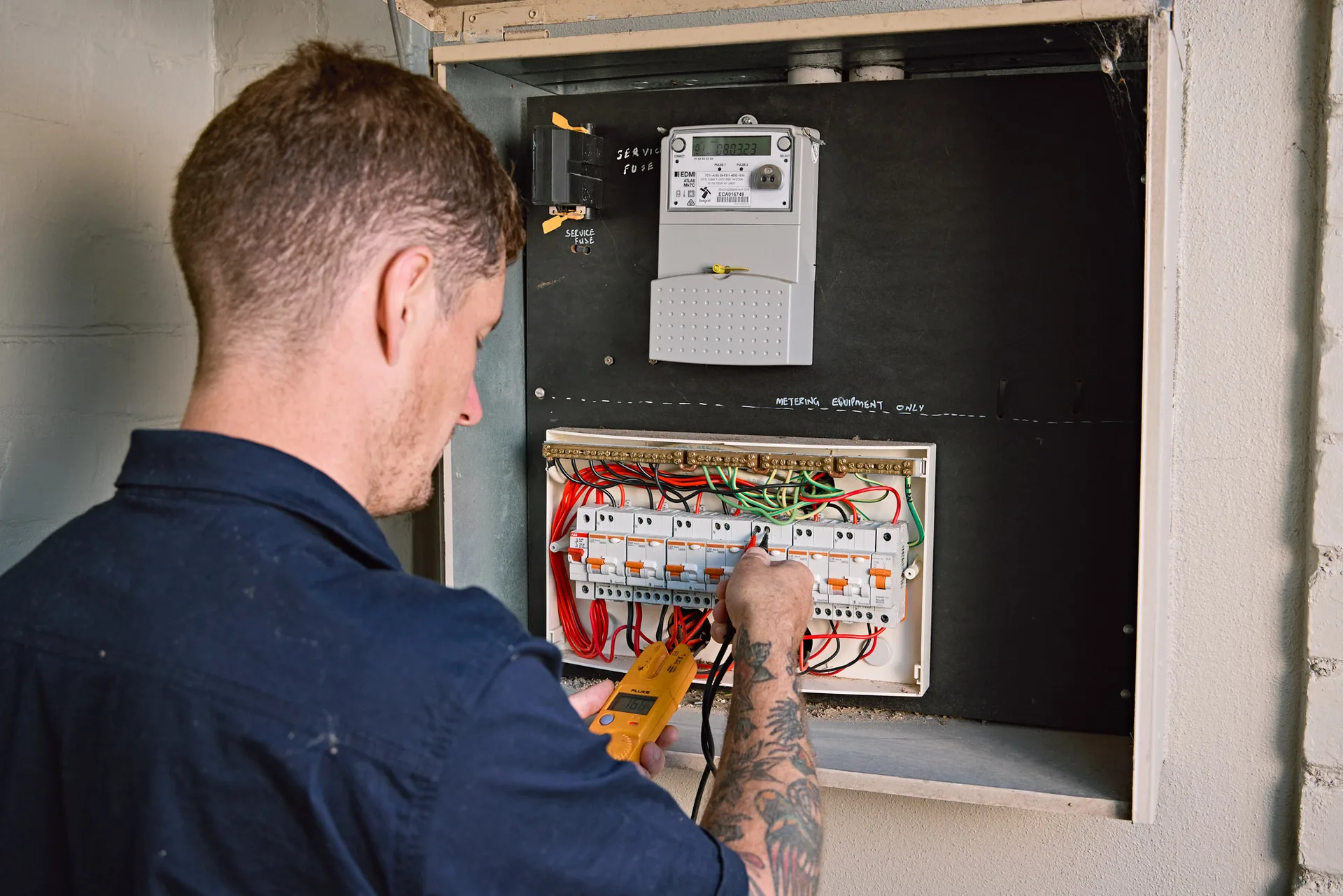
Most noisy boards are not an emergency in that exact moment, and none of them are nothing. The line between the two is drawn by what accompanies the sound.
Treat it as urgent when the noise arrives with any of these:
- a burning or hot-plastic smell nearby
- heat radiating from the panel or one particular switch
- scorching or discolouration you can see
- a volume that has clearly risen over a few days
Any of those means a connection is actively overheating, and that is where a switchboard fault crosses into fire risk.
A faint, unchanging hum with none of the above can be scheduled as a routine visit. Just do not file it under forever; a change in the sound, not merely its presence, is your trigger to move fast.
Three Safe Steps To Take Now
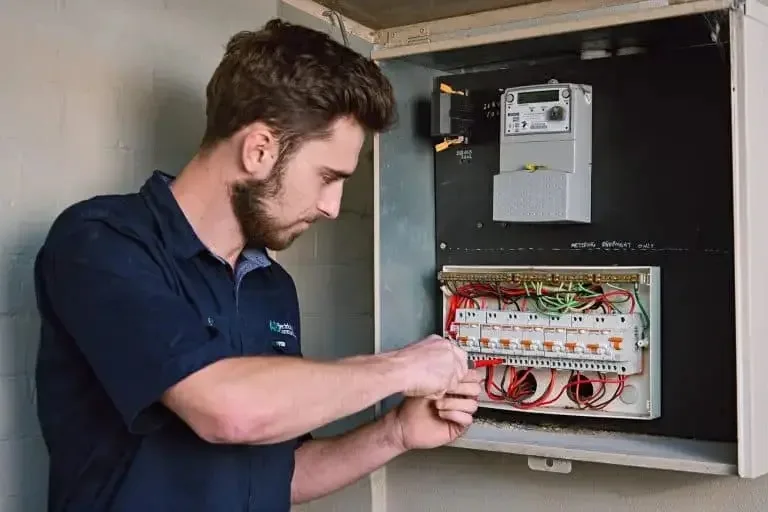
- Leave the board closed. Note what you can hear and see from outside the cover, and nothing more.
- Isolate the main switch if heat or odour joins the noise. That is safe to do and stops the fault while you wait.
- Unplug heavy appliances on the affected circuit if you can work out which circuit it is.
How We Fix a Noisy Breaker Box
We isolate the switchboard before opening it, then check every terminal for torque, heat damage and corrosion. The loudest point from outside the cover is not always the true fault, because sound travels along a metal enclosure, so nothing gets assumed.
Loose connections are re-terminated to the correct torque. Breakers on the way out are replaced with correctly rated units, and anything showing heat damage prompts a look at what sits near it.
The board then runs under load while we confirm the noise is gone and every connection holds its proper temperature. You get told exactly what was found, in plain terms.
Renting? Whose Job the Board Is
Tenants often sit on a buzzing board for months because they are not sure it is theirs to report. It is, and promptly.
The switchboard is part of the premises, so keeping it safe and functional generally falls to the landlord or agent rather than the renter. Your job is simply to flag the noise in writing as soon as it registers.
If you own the property and lease it out, a noise report from a tenant is worth acting on the week it lands. A documented electrical complaint that later turns into an incident is an uncomfortable file to own.
The Noisy-Board Pattern We Keep Seeing
A good share of the older boards we open around the village and along Copeland Road still carry original hardware, patched across the decades rather than rebuilt as demand grew.
Add a modern kitchen and a big reverse-cycle unit onto a board fitted when Beecroft households ran a fraction of today's load, and connections begin working hotter than anything in the enclosure was designed to tolerate.
That is usually the real story behind a hum that has crept louder over recent months. Not one dramatic new fault, but a board quietly living at the edge of its capacity.
Preventing the Next Noisy Breaker Box
A quiet switchboard is one that is not being pushed past its design, and keeping it that way is cheaper than any callout. The reliable moves:
- Have a pre-modern board reviewed on its age alone, before it has anything to say. A full board upgrade fixes the capacity problem underneath, not just the symptom.
- Chase intermittent sounds early through prompt electrical repairs, before arcing has time to eat the terminal it lives in.
- Distribute heavy appliances across circuits so no single connection carries the household.
- Put an older board on a periodic service schedule, even while it seems content.
Other Faults We Chase Down
A noisy board sometimes belongs to a wider fault on the same circuit rather than standing alone. On older boards, a fuse that keeps blowing can crackle in a very similar way just before it goes, and any warm or marked power points nearby deserve their own inspection while we are there.
We do the same switchboard work through Pennant Hills and Normanhurst.

Book an Electrician Today
A humming or buzzing switchboard deserves a verdict from someone holding a thermal camera and a torque driver, not a guess from across the hallway. We will isolate it safely, name the cause, and repair it properly, often same or next day.
Ring (02) 9139 8011 before the sound changes.
Common questions
Noisy Breaker Box FAQs
Answers for anyone whose switchboard has stopped being the quiet type.
Is a humming switchboard normal?
A faint, steady hum from a transformer or dimmer inside the board can be normal background noise. A hum that's new, getting louder, or paired with heat or a smell is not, and is worth having checked rather than lived with.
What does a buzzing breaker usually mean?
Most often it's a loose connection arcing slightly under load, or a breaker itself starting to fail internally. Either way the breaker is under more stress than it should be, and that stress tends to get worse, not better, on its own.
Can I keep using the circuit while I wait for someone to look at it?
Usually yes, if it's just noise with no heat, smell or visible damage. If you notice any of those extra signs, isolate that circuit and treat it as urgent instead.
Will my safety switch protect me from a noisy breaker?
Not from this particular fault. A safety switch guards against electric shock from earth leakage, which is a different job to preventing overheating at a loose connection, so a noisy board still needs a proper look.
How do you find which breaker is the problem?
We isolate the board safely and test each breaker and connection individually, checking torque, load and signs of heat damage rather than just listening for where the noise is loudest, since sound can travel along a switchboard.
Does an old switchboard make this more likely?
Yes. Original boards from Beecroft's early housing stock were built for a fraction of today's electrical load, and connections and breakers under sustained higher demand than they were designed for are more prone to loosening and arcing.